How to Create a Bee-Friendly Garden in the Bay Area
A beautiful garden can do much more than improve the appearance of your home. With the right plants and a few thoughtful choices, your yard can become an important food source for honey bees and other pollinators throughout the year.
Here in the Bay Area, our relatively mild climate gives homeowners an excellent opportunity to create landscapes that provide nectar and pollen during different seasons. You don’t need acres of land or dozens of flower beds, either. A backyard garden, a small patch beside the driveway, or even containers on a patio can give visiting bees another place to find food.
At The Honey Ladies, we see firsthand just how important healthy environments are for bees. Our hundreds of hives throughout the Bay Area depend on the flowers, trees and plants growing throughout our communities. Creating a more bee-friendly yard is one simple way local homeowners can help.
What Makes a Garden Attractive to Bees?
Bees aren’t particularly interested in whether your landscaping would win a neighborhood gardening contest. They’re looking for food. Flowering plants provide nectar, which is an important source of carbohydrates, and pollen, which supplies protein and other nutrients.
The key is diversity.
Rather than planting one variety that flowers for only a few weeks, consider creating a garden with plants that bloom at different times. Spring flowers can provide food as colonies become increasingly active, while summer and fall flowers help maintain food sources later in the season.
UC Davis recommends creating pollinator gardens with diverse nectar- and pollen-rich plants and choosing flowers with different shapes, sizes and colors. They also recommend grouping several of the same plant together rather than scattering individual plants throughout a garden.
Choose Plants That Bees Can Put to Work
California offers homeowners an incredible selection of plants that can support pollinators.
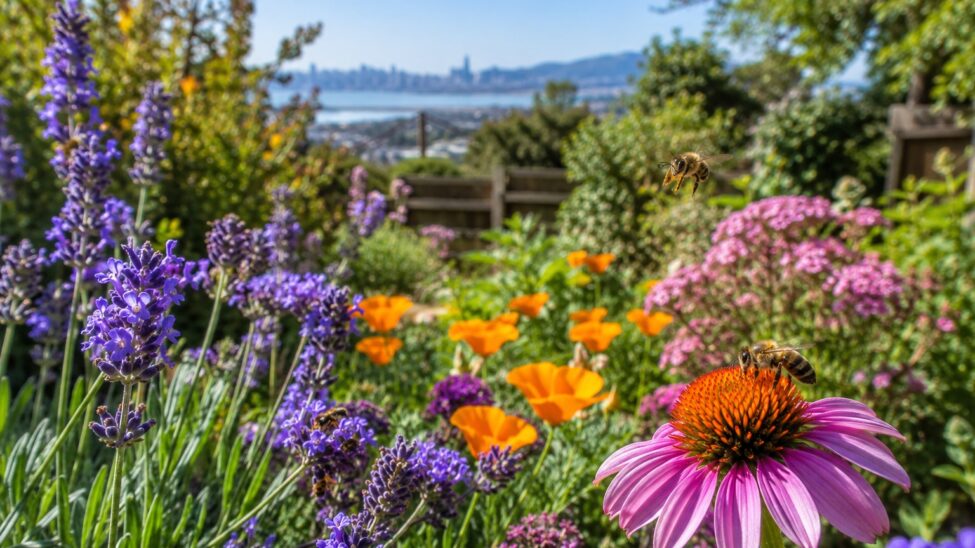
Native sages are a great example. California lilac, California poppies, California buckwheat, goldenrod and Western redbud are additional options that can add color and variety while providing resources for visiting pollinators.
Don’t assume that every plant needs to be native, however. Many non-native garden plants can also provide useful nectar and pollen. Lavender, rosemary, sunflowers and other flowering herbs and ornamentals can attract plenty of activity when blooming.
One of the best strategies is simply to pay attention to your garden. Walk outside on a sunny afternoon and see which flowers are receiving the most visitors. Bees will quickly tell you which parts of your garden they prefer.
For homeowners interested in going deeper, the UC Davis Arboretum’s pollinator gardening resources provide excellent information about California pollinators and plants that can help support them.
Don’t Forget About Water
Like other living creatures, bees need water.
A shallow water source can make your yard even more useful, particularly during hot and dry Bay Area weather. The important word is shallow. A deep container filled with water can become a drowning hazard.
Instead, consider a shallow dish containing clean water and several rocks, pebbles or other landing surfaces that remain above the waterline. Bees can land on these surfaces and reach the water without having to float or swim.
Place the water somewhere relatively quiet and check it regularly. During warm weather, evaporation can empty a small container surprisingly quickly.
A Healthy Yard Can Become Part of a Much Larger Habitat
One bee-friendly garden might seem insignificant when compared with the size of the Bay Area, but think about what happens when hundreds or thousands of homeowners make similar choices.
A flowering front yard leads to another garden down the street, which leads to flowering trees at a neighborhood park, herbs growing on someone’s patio and another patch of flowers several blocks away. Together, these spaces create a network of food sources that pollinators can use as they travel through our communities.
Homeowners can also help by being thoughtful about pesticide use. Products designed to kill unwanted insects may affect beneficial insects as well. Always read product labels carefully, follow application directions and consider whether a nonchemical approach might solve the problem first.
Another easy change is allowing the garden to be slightly less “perfect.” Not every flower needs to disappear the moment it begins to fade, and not every inch of exposed soil needs to be covered. California is home to many native bee species in addition to honey bees, and some native bees nest in the ground.
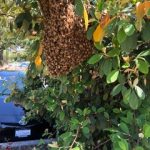
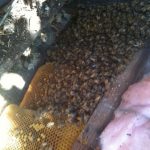
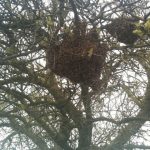
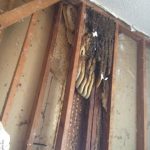
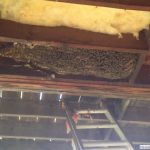
Of course, creating a bee-friendly garden can occasionally mean seeing more bee activity around your property. Seeing individual bees visiting flowers is very different from discovering a colony living inside a wall, roof, shed or another part of your home.
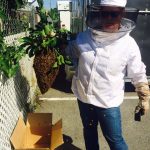
If you discover a swarm or established colony where it shouldn’t be, don’t spray it or attempt to remove it yourself. The Honey Ladies specializes in professional live bee removal and works to safely relocate bees whenever possible.
Bees do an extraordinary amount of work for our environment, and supporting them doesn’t have to be complicated. Plant a few more flowers. Give them a safe source of water. Be thoughtful about pesticides. Allow different plants to bloom throughout the seasons.
Your garden may be small, but to a hungry bee searching the neighborhood for its next flower, it can be exactly what she needs.