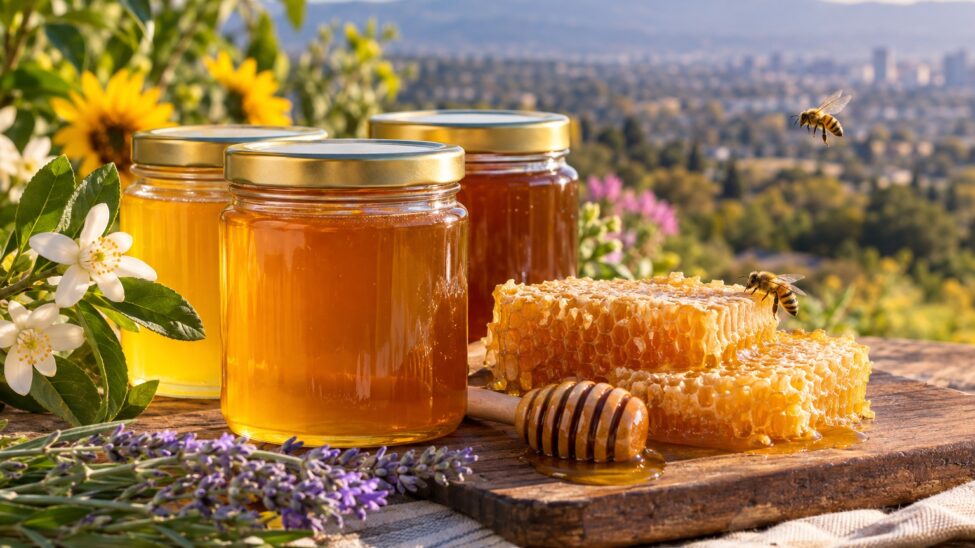
Raw Honey vs. Regular Honey: What’s the Difference?
Walk through the honey aisle at almost any grocery store and you’ll probably see dozens of different choices. There’s clover honey, wildflower honey, organic honey, filtered honey, raw honey and plenty of other varieties. While they may all look similar sitting inside a jar, not all honey is processed or sourced in the same way.
One of the biggest distinctions consumers encounter is raw honey vs. regular honey. Understanding the difference can help you make a more informed choice, especially when you have access to local beekeepers and honey producers.
At The Honey Ladies, we love helping people throughout San Jose and the Bay Area learn more about honey, honeybees and the incredible work that goes into every jar.
What Is Raw Honey?
Raw honey generally refers to honey that has undergone minimal processing after being removed from the hive. Beekeepers may strain the honey to remove larger pieces of beeswax or other material, but raw honey is typically not subjected to the same high-heat processing and fine filtration commonly associated with many mass-produced products.
That means the honey remains much closer to the condition it was in when it came from the hive.
One of the most interesting things about honey is that it reflects its environment. Honeybees travel from flower to flower collecting nectar, and the plants available in their foraging area can influence the honey’s color, aroma and flavor.
This is why honey from different regions—or even different seasons in the same region—can taste surprisingly different.
Why Does Raw Honey Crystallize?
Have you ever opened your cabinet and discovered that your honey has become thick, cloudy or grainy?
Don’t immediately throw it away.
Crystallization is a natural process that can occur in honey. The speed at which it happens varies according to factors such as the honey’s natural sugar composition, storage temperature and floral source.
Crystallized honey is not necessarily spoiled honey.
Many people actually enjoy its thicker, spreadable texture. If you prefer liquid honey, gentle warming can often return crystallized honey to a more fluid consistency.
How Is Regular Store-Bought Honey Different?
Commercial honey can be processed differently depending on the producer. Some honey is heated and filtered to create the clear, smooth and consistently liquid appearance shoppers are accustomed to seeing on grocery store shelves.
Processing can also make honey easier to bottle and help delay crystallization.
Another difference can be sourcing. Large commercial honey products may contain honey collected from multiple geographic regions to create a consistent flavor and appearance.
Local honey offers a very different experience.
When you purchase honey from a local producer, you have a better opportunity to know where the honey came from and learn about the beekeeper or business behind it.
For people in San Jose and throughout the Bay Area, purchasing local honey is also a simple way to support businesses involved in beekeeping and the protection of honeybee populations.
Local Honey Is About More Than the Jar
Buying local honey connects you to something much larger than a sweetener.
Honeybees play an important role as pollinators. As they move between flowers collecting nectar and pollen, they also transfer pollen between plants. This process helps many flowering plants reproduce and supports the ecosystems and agricultural systems around us.
Local beekeepers work directly with these remarkable colonies.
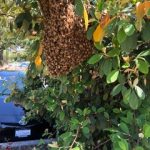
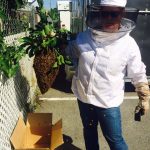
The Honey Ladies are particularly passionate about protecting bees. Rather than simply viewing an unwanted colony as a pest problem, professional live bee removal can provide an opportunity to relocate honeybees whenever conditions allow.
Those rescued bees can continue pollinating flowers and contributing to the local environment.
Choosing the Right Honey for You
There isn’t one variety of honey that everyone will prefer.
Some people enjoy mild, delicate honey while others prefer something darker with a stronger flavor. The nectar sources available to honeybees influence the final product, which is why exploring different varieties can be so much fun.
The Honey Ladies offer several varieties and bee-related products, including Clover Blossom, Eucalyptus Honey, Sage Blossom Honey, Starthistle Honey, Poison Oak Honey, Raspberry Blossom Honey, honeycomb and bee pollen.
Try using different honey varieties in tea, oatmeal, yogurt, toast, marinades, salad dressings or baked goods. You may discover that certain varieties work particularly well with different foods.
Discover Local Honey in the San Jose Area
The next time you reach for a bottle of honey, take a moment to think about where it came from.
Honey isn’t simply another manufactured sweetener. It begins with thousands of trips made by hardworking honeybees visiting flowers throughout their environment. The plants they encounter, the season of the harvest and the way the honey is handled afterward all contribute to what eventually reaches your table.
Choosing local honey in San Jose gives you an opportunity to experience honey connected to beekeepers and producers in your community while supporting the people who work with honeybees every day.
The Honey Ladies are committed to protecting honeybees while sharing the incredible products they create. Whether you’re interested in trying a new honey variety, purchasing honeycomb or learning more about bees, there is always something new to discover inside the hive.
Explore the honey and bee products available from The Honey Ladies and discover just how different real honey can be.