Bees vs. Wasps vs. Yellow Jackets: How to Tell the Difference Around Your San Jose Home
You are enjoying a beautiful afternoon in your backyard when suddenly a buzzing insect starts circling your patio table. Is it a honey bee, a wasp, or a yellow jacket? While these insects may look similar at first glance, they have very different behaviors, nesting habits, and roles in the environment.
For homeowners throughout San Jose, Santa Clara, Campbell, and the surrounding Bay Area, knowing the difference can be especially important when insects begin gathering around outdoor living spaces, gardens, or the exterior of a home.
Some are beneficial pollinators simply searching for flowers, while others may be attracted to your lunch or defending a nearby nest. Understanding what you are dealing with can help you make better decisions about protecting your family and property.
At The Honey Ladies, we believe education is an important part of responsible insect management. As experienced beekeepers and removal specialists, we help Bay Area residents identify unwanted insect activity and determine the appropriate next steps.
Understanding the Differences Between Bees, Wasps, and Yellow Jackets
Although honey bees, wasps, and yellow jackets all belong to the insect order Hymenoptera, their appearance, behavior, and nesting preferences can vary considerably.
Learning a few distinguishing characteristics can help you recognize which insect may be visiting your property.
1. Honey Bees: The Hardworking Pollinators
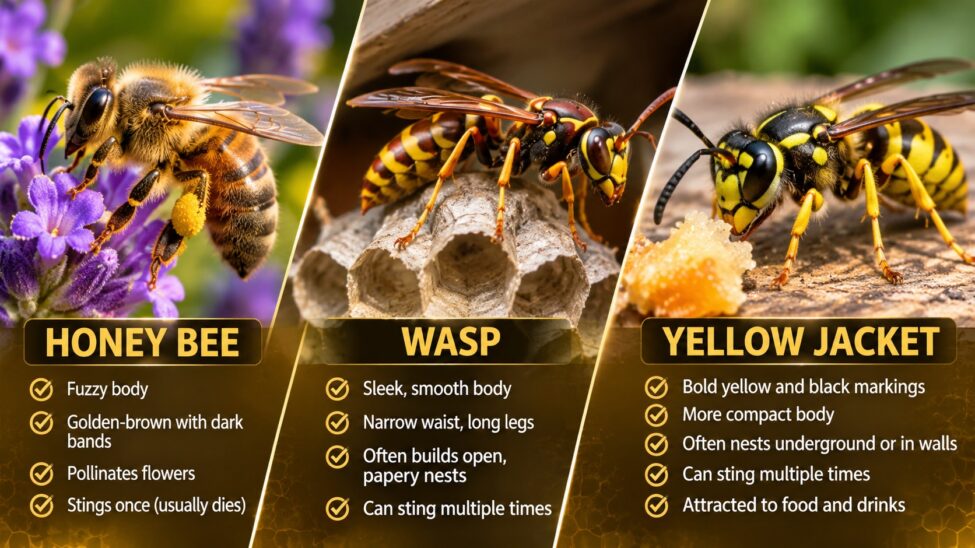
Honey bees are among the most recognizable and beneficial insects in California. Their bodies are generally golden-brown with darker bands, and they have a somewhat fuzzy appearance that helps them collect pollen from flowers.
Unlike many wasps, honey bees primarily focus on gathering nectar and pollen to support their colonies.
You will often find them visiting flowering plants, fruit trees, vegetable gardens, and other sources of nectar.
Honey bees typically do not seek confrontations with people when they are away from their hive. However, they may become defensive if their colony is disturbed or threatened.
A honey bee can sting, and worker honey bees generally die after stinging a person because their barbed stinger becomes lodged in the skin.
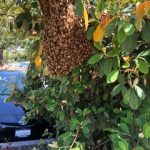
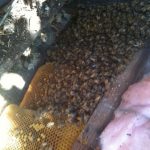
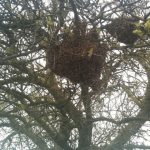
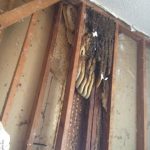
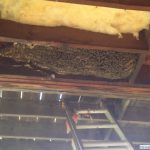
Honey bees establish colonies in protected cavities such as hollow trees, wall spaces, and other enclosed locations. When they move into residential structures, professional removal may be necessary.
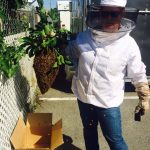
The Honey Ladies specializes in live honey bee removal in San Jose and surrounding communities, helping relocate colonies rather than unnecessarily destroying these important pollinators.
2. Wasps: Slender Insects That Help Control Other Pests
Wasps are frequently mistaken for honey bees, but several physical characteristics make them easier to identify.
Many common wasps have smooth, relatively hairless bodies, narrow waists, and long legs. Their coloring varies by species, with some displaying black and yellow markings and others appearing reddish or brown.
Paper wasps, for example, often construct exposed nests with open, umbrella-shaped combs beneath roof eaves, patio covers, and other sheltered surfaces.
Unlike honey bees, many wasps hunt other insects, making them useful natural predators in gardens and agricultural environments.
Some wasps also visit flowers and contribute to pollination.
However, social wasps may aggressively defend their nests when they perceive a threat.
Another important difference is that wasps can generally sting multiple times without dying.
If you discover an active wasp nest near a doorway, children’s play area, or heavily used outdoor space, avoid disturbing it and consider having it professionally evaluated.
3. Yellow Jackets: The Uninvited Backyard Guests
Yellow jackets are actually a type of social wasp, but their behavior and nesting habits make them worth discussing separately.
They typically have bright yellow and black markings, smooth bodies, and a more compact appearance than many paper wasps.
Yellow jackets are particularly noticeable around outdoor meals, garbage containers, picnic areas, and backyard gatherings.
Unlike honey bees, which primarily collect nectar and pollen, yellow jackets may seek sugary foods, meat, and other protein sources.
This is one reason they frequently appear around barbecues and outdoor dining areas.
Yellow jackets often construct enclosed nests underground in abandoned rodent burrows or other protected cavities. Some species also establish nests inside wall voids and other structural spaces.
Because they can defend their colonies aggressively and sting repeatedly, yellow jackets may present a significant concern when nests are located close to human activity.
Homeowners should never attempt to dig out, seal, or disturb an active yellow jacket nest.
For additional information about identifying and managing yellow jackets, visit the University of California Integrated Pest Management Program, which provides research-based guidance about common California pests.
What Should San Jose Homeowners Do When These Insects Become a Problem?
Seeing a few bees or wasps in your yard does not necessarily mean you have an infestation.
Honey bees visiting your garden are generally performing an important ecological service. Likewise, a solitary wasp searching for food may not require any action.
The situation changes when you notice repeated insect activity around a particular location.
For example, numerous insects entering and exiting the same opening beneath a roofline may indicate an established colony or nest.
Similarly, yellow jackets repeatedly emerging from a hole in the ground could suggest an underground nest.
Here are several precautions homeowners can take:
- Keep outdoor garbage containers tightly closed to reduce food sources that attract yellow jackets.
- Clean up spilled drinks, food scraps, and sugary substances after outdoor gatherings.
- Inspect rooflines, patio covers, and exterior structures for signs of nesting activity.
- Avoid swatting at flying insects or making sudden movements near active nests.
- Keep children and pets away from areas where large numbers of insects are gathering.
- Never block the entrance to an active nest or colony without professional guidance.
It is also important to avoid indiscriminate pesticide applications, particularly when dealing with honey bees.
Honey bees contribute to the pollination of many plants and agricultural crops, making responsible management especially valuable.
Why Professional Identification Matters
Misidentifying an insect can lead to unnecessary treatment or an ineffective removal attempt.
For example, a homeowner who assumes honey bees are yellow jackets might use a pesticide when live relocation would have been a more appropriate solution.
Conversely, someone who mistakes an active yellow jacket nest for a harmless group of pollinating bees could accidentally place themselves at risk.
Professional identification helps determine what type of insect is present, where it is nesting, and which removal approach is appropriate.
At The Honey Ladies, we have extensive experience working with honey bees throughout the San Francisco Bay Area. Our company also advertises removal services for wasps and yellow jackets.
Our mission is to protect beneficial honey bees whenever possible while helping homeowners address unwanted insect activity around their properties.
Protect Your Family and Property with The Honey Ladies
Whether you have discovered a honey bee colony inside a wall, a wasp nest beneath your roof, or yellow jackets gathering near your patio, understanding the type of insect involved is the first step toward finding the right solution.
The Honey Ladies proudly serves San Jose, Santa Clara, Campbell, and surrounding Bay Area communities with professional bee removal and related insect removal services.
Our experienced team understands the importance of responsible insect management and works to help homeowners resolve concerns while respecting the important role pollinators play in our environment.
If you are unsure whether the insects around your property are honey bees, wasps, or yellow jackets, contact The Honey Ladies for assistance.
Call (408) 531-5045 or visit The Honey Ladies website to learn more about our removal services.
When it comes to bees and wasps, knowing the difference can make all the difference!